
How to Sell Digital Products Online: Step by Step guide


If you’re new to online business, the best way to start is to sell digital products online. E-books, courses, or software—digital products give you the opportunity to earn from your skills.
Digital products leverage their skills, knowledge, and creativity to ensure their products generate long-term income.
Profitable digital product sales take time and effort, guided by research, planning, and smart execution.
From choosing the right product to marketing and scaling, every step requires careful strategy and planning. Following each stage systematically ensures your digital product business succeeds.
Why Selling Digital Products?
Selling digital products online is one of the smartest and most profitable business models today. It offers low startup costs, high profit margins, and instant global reach. With unlimited scalability, it’s ideal for long-term online success.

Digital products don’t require warehousing or delivery systems. Once created, they can be sold again and again with near-zero costs, making them highly profitable and easy to scale.
Here are the core reasons why selling digital products works so well:
- Beginner-Friendly Setup
- Higher Return on Sales
- Passive and Scalable Income
- Global Online Visibility
- Creative & Knowledge-Based Income
Digital products let you reach a global audience, automate sales, and deliver instantly. This makes them a powerful way to generate income around the clock.
That’s why learning how to sell digital products online is an essential step for creators, educators, and entrepreneurs who want a sustainable and future-proof business.
It provides global reach and automated income. Learning to sell digital products online is essential for sustainable success.
This complete guide teaches you how to build, expand, and maintain a digital product business from zero. When followed properly, it shows you how to create digital products and earn consistent income.
1. Choosing the Right Product
The most important step in learning how to sell digital products online is choosing a product with real world demand. Without a product that solves a genuine problem and fits your experience, marketing efforts won’t be effective.

Start by identifying your skills, knowledge, and interests. You don’t need to be an expert—just one step ahead of your audience.
Ask yourself simple questions like:
- What do people often ask me for help with?
- What do I enjoy teaching, explaining, or creating?
- What problems can I realistically solve?
Digital product success comes from matching your skills with problems people are already trying to solve. This approach reduces risk and helps you build products that customers genuinely want.
Make sure people want it first. Review similar products, monitor search behavior, and join forums or social groups in your niche.
Don’t try to cover everything—target one outcome per product for faster creation and easier understanding. Pick a product that allows future enhancements or expansions, ensuring long-term profitability.
Choose a product that solves a real problem, has demand, and take action—perfection isn’t required.
2. Creating Your Digital Product
Once you’ve chosen the right idea, the next step in learning how to sell digital products online is creating your product. A well-crafted digital product delivers value, solves a problem, and keeps your audience coming back for more.

Digital products come in many forms, and the right type depends on your skills, audience, and goals. Some popular options include:
- eBooks: Perfect for sharing knowledge in a concise, easy-to-read format.
- Online Courses: Ideal for teaching skills through video, audio, or written content.
- Templates & Tools: Time-saving resources like spreadsheets, planners, or design templates.
- Software or Apps: Digital solutions that solve specific problems for users.
- Checklists, Guides, and Workbooks: Quick, actionable resources for beginners.
Before building your product, organize it into steps or sections so the content is clear and complete.
Focus on making your digital product clear, practical, and visually attractive so your audience can get results. Use tools like Canva, Docs, PowerPoint, or screen-recording software to design and deliver content like a pro.
Before selling, test your product for clarity and ease of use, improve it with feedback, and set up automated access.
A strong digital product solves a clear problem, delivers real value, and offers a simple user experience. When planned well and delivered smoothly, it becomes the foundation of a profitable online business.
3. Setting Up an Online Store
Selling digital products online begins with a professional and user-friendly store that builds credibility—no coding required.
An online store handles product discovery, payments, and delivery, which is why it needs to be reliable, safe, and user-friendly.

Choose the Right Platform: Shopify or WordPress
When learning how to sell digital products online, Shopify and WordPress are the two best platforms for beginners and professionals.
Shopify is the ultimate all-in-one platform for digital products. It handles hosting, security, and payments seamlessly. With tools like Digital Downloads or SendOwl, your eBooks, courses, and software are delivered automatically, creating a smooth buying experience.
WordPress with WooCommerce provides complete control and flexibility for selling digital products. Using plugins like Easy Digital Downloads or MemberPress, you can monetize downloads, courses, and memberships while growing traffic through SEO and content marketing.
Set Up Essential Store Pages
No matter which platform you choose (Shopify or WordPress) , your store should include:
- Product page with clear benefits, features, and pricing
- Checkout page that is simple and distraction-free
- Thank-you or access page explaining how customers receive the product
- Privacy policy and terms to build trust
Secure and easy payment systems play a crucial role in selling digital products. PayPal, Stripe, and card payments make checkout fast and reliable on Shopify and WordPress.
When selling digital products, automation makes delivery fast and effortless. It improves customer satisfaction while reducing manual work.
Your online store is the backbone of your digital business. Choosing Shopify for simplicity or WordPress for flexibility, ensure it’s automated, user-friendly, and trustworthy to scale successfully.
4. Set Pricing Your Product
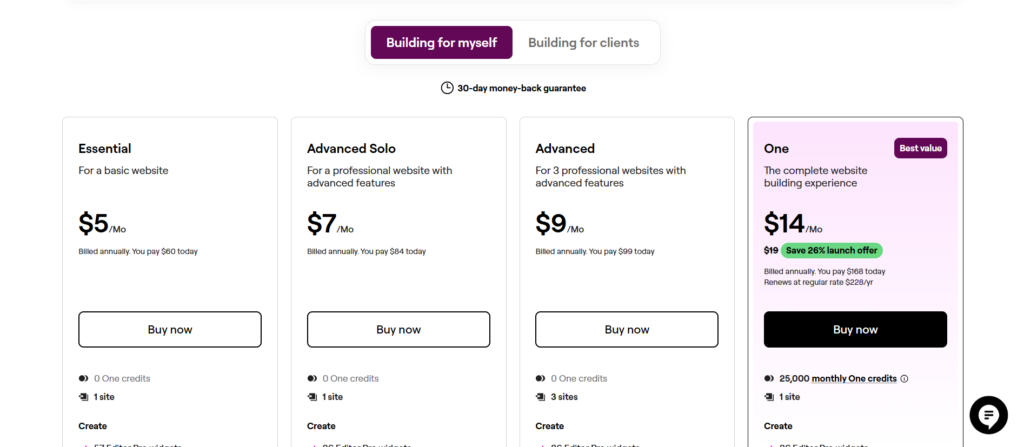
Pricing your digital product isn’t just about numbers. It’s a reflection of your product’s market value, customer perception, and confidence in your brand.
The right price helps customers understand what your product is worth and why they need it. When done smartly, pricing isn’t a guess—it’s a tool to boost your profits.
Instead of thinking about how much time or effort you spent, focus on what your customer gets from using your product.
For example, a WordPress theme that improves site speed, boosts conversions, and looks professional helps users save time and earn more—making it far more valuable than a basic design file.
Example: Pricing a WordPress Theme
Let’s say you’re selling a WordPress theme for bloggers and affiliate marketers:
- A simple, beginner-friendly theme could be priced at $29–$59
- A premium theme with SEO optimization, fast loading, and customization options could be $79–$129
- A theme bundled with tutorials, lifetime updates, or support can justify $200+
Research popular WordPress theme marketplaces and independent sellers. Notice how pricing changes based on features, support, updates, and branding. You don’t need to be the cheapest—aim to be the best value for your audience.
Use Tiered Pricing to Increase Revenue
Offering multiple plans works extremely well for digital products:
- Basic – Theme only
- Pro – Theme + updates + support
- Premium – Theme + tutorials + bonuses
This strategy increases conversions while maximizing profit per customer.
One advantage of digital products is pricing flexibility. You can test introductory prices, run limited offers, or increase rates as demand grows. As your WordPress theme gains reviews and trust, higher pricing becomes easier and more natural.
Think Long-Term, Not One-Time Sales
A well-priced digital product creates ongoing income. With upsells, bundles, and future upgrades, a single WordPress theme can evolve into a scalable business asset.
Beautiful pricing aligns value, confidence, and strategy. When your price matches your product’s impact, selling digital products online becomes both elegant and highly profitable.
5. Marketing Strategies
Even the best digital products don’t sell themselves. Smart marketing is the key to getting your product in front of the right audience, and driving consistent sales.
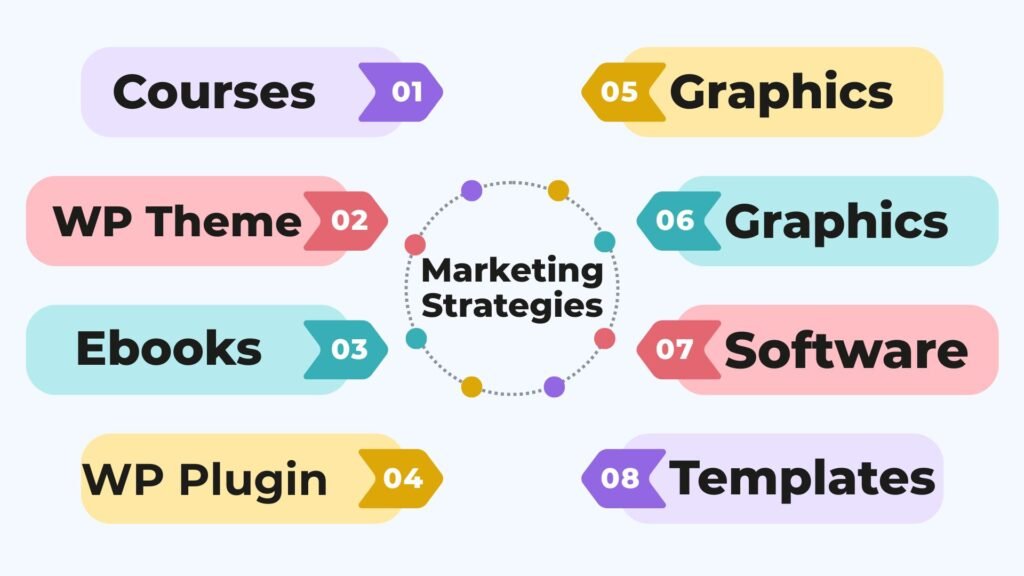
The success of selling digital products largely depends on an effective and realistic marketing plan.. A successful product can differentiate itself from another product struggling to attract attention.
1. Content Marketing
Content is the foundation of online growth. Simple blog posts, tutorials, videos, and guides help educate your audience and demonstrate the value of your digital products.
For example, if you sell a WordPress theme, write in-depth articles such as “How to build a high-converting blog” or create video demos showing your theme in action. High-quality content improves SEO, attracts organic traffic, and positions you as an expert in your niche.
2. Affiliate Marketing
Encouraging others to promote your product through an affiliate program is a smart and beginner-friendly way to grow sales. Each sale affiliates bring earns them a reward, meaning you only pay for measurable results.
This strategy works well for digital products because it motivates influencers, bloggers, and content creators to share your product with their audience.
3. Email Marketing
Building an email list allows you to turn interested visitors into loyal buyers. Offer a free resource to collect email sign-ups and stay connected with your audience. Use targeted emails to promote your digital product and drive consistent sales.
4. Social Media Marketing
Social media platforms give you direct access to your ideal audience. By sharing educational content, practical how-tos, and short product showcases on Instagram, Pinterest, LinkedIn, and YouTube, you can build authority and grow engagement. This consistent presence helps drive steady traffic to your store.
5. Paid Advertising
Paid traffic delivers the best results when guided by strategy and testing. Platforms like Facebook Ads, Google Ads, or Pinterest Ads allow you to target high-intent audiences based on interests, search behavior, or demographics.
Advertising platforms allow precise audience targeting, while conversion tracking shows what works. Retargeting ensures you reconnect with interested users, turning missed opportunities into sales.
Note: The goal of marketing is not just to attract attention first, but to gain an audience first and then sales.
6. Delivering Products to Customers
Delivering your digital product properly is just as important as building and selling it.Customers expect instant access, and a reliable delivery system helps reduce refunds and increase trust.
Automated delivery is essential for scaling digital product sales. Customers receive instant access to their purchases, and your business continues generating sales 24/7 with minimal maintenance.
Shopify and WordPress provide reliable solutions for digital product delivery. Shopify uses apps like SendOwl for instant downloads, while WordPress plugins allow secure file protection and customer access management.
Digital product security matters—use safe links, restrict access, and stop unauthorized sharing, yet keep it simple for actual users.
Always include support contact details after purchase.
Note: Smooth delivery builds confidence, encourages loyalty, and earns positive feedback.
7. Scaling Your Digital Business
Once your digital products are performing well, the next step is business growth. Scaling is about working efficiently, using automation, and expanding your audience without compromising quality.
Start by analyzing your most profitable products. Improve them with bundles, upgrades, or enhancements, and grow your reach through ads, affiliates, and content marketing.
Automation is essential for growing your digital business. Serve more customers with email and membership tools, and expand your offerings to increase loyalty and revenue.
Build loyal fans—happy customers boost sales and promote your brand. Pair automation, marketing, and strategic growth to scale your digital business.
8. Tips for Long-Term Success
Selling digital products long term requires patience and consistency, not shortcuts. Focus on solving real problems and always put customer value first. Regular updates ensure your product stays useful and competitive.
Listen carefully to your customers—reviews and questions reveal what to improve and what to build next. Let data guide your decisions, not guesswork.
Regular content, email marketing, and social engagement turn attention into trust—and trust into repeat sales.






One Comment