Affiliate marketing vs Dropshipping: which is more profitable?

As two of the most common online business models in 2026, affiliate marketing vs dropshipping provide unique earning methods with contrasting risks and scaling potential.
Affiliate marketing is a performance-based process where you earn money by promoting other people’s products or services using your unique affiliate link.
Dropshipping is selling products online without storing them yourself.
Choosing between these two models depends on profitability, scalability, workload, and long-term reliability.
In this guide, we compare affiliate marketing and dropshipping across costs, profits, time commitment, and earning potential to help you pick the right option for your goals and budget.
1. How Affiliate Marketing Works
Affiliate marketing is a commission-driven system where income is earned by promoting third-party products and driving successful conversions.
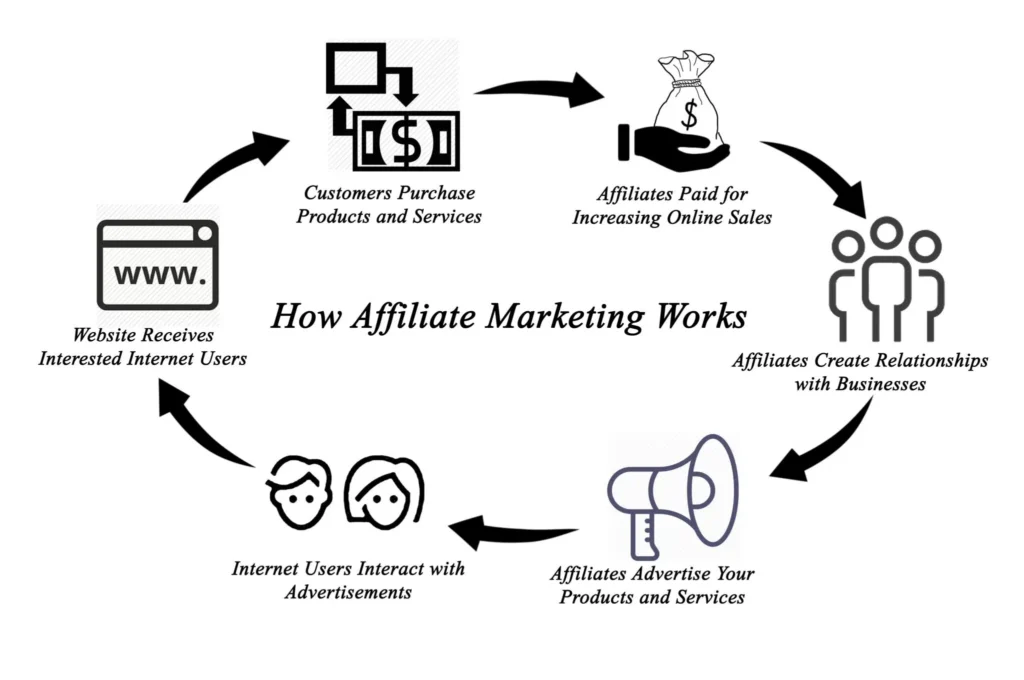
Image Credit: www.affiliatewp.com
Affiliate marketers use blogs, videos, social media, and emails to drive traffic, leaving all operations and customer handling to the company.This model generates long-term revenue by leveraging evergreen content like tutorials and reviews.
The low-risk nature of affiliate marketing lets you earn by driving traffic, not by managing products or customers.
Through evergreen articles and email funnels, affiliate marketing can deliver consistent commissions over time.
2. How Dropshipping Works
Dropshipping is an e-commerce system where you sell products online without keeping inventory. After a sale, the supplier packages and delivers the product directly to the customer.
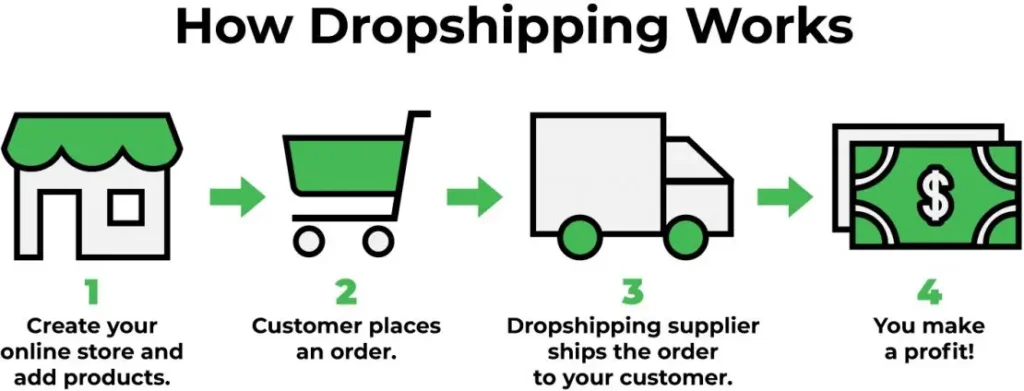
Image Credit: www.greendropship.com
Dropshipping often relies on paid advertising through platforms like Facebook, TikTok, or Google Ads to drive sales quickly. Success depends on ad performance, product selection, supplier reliability, and customer satisfaction.
Dropshipping is suitable for those who want control over branding and sales. It works best for people who are comfortable managing daily store operations.
It can be very profitable with the right products and effective advertising.
3. Startup Costs: Affiliate Marketing vs Dropshipping
Startup costs matter most for beginners choosing between affiliate marketing and dropshipping. You can start either business with minimal investment. Their setup and costs over time are very different.
Affiliate Marketing Startup Costs
Affiliate marketing is a low-cost online business model that’s easy to start. You can begin with little to no upfront investment.
Typical costs may include:
- Domain name: Low one-time or yearly cost
- Web hosting: Budget hosting plans are usually enough for beginners(Hostinger is $2.99 per month with free One Year Domain)
- Additional tools: SEO software(Semrush, Ahrefs), email marketing platforms, or content creation apps—optional but helpful as you grow.
There’s no need to invest in products, inventory, or ads at the start. Affiliates usually grow by publishing helpful content and attracting free traffic through SEO and social media, making this model easy and safe for newcomers.
Dropshipping Startup Costs
Starting a dropshipping store needs more money initially compared to starting affiliate marketing.
Common dropshipping costs include:
- Domain & hosting
- Ecommerce platform (such as Shopify or WooCommerce)
- Paid themes or apps
- Product testing costs
- Paid advertising (Facebook, TikTok, or Google Ads)
- Refunds and chargebacks
While you don’t need to buy inventory in bulk, you still need capital for ads, store setup, and testing products. Without consistent ad spending, traffic and sales usually stop, which increases financial risk—especially for beginners.
Note: Affiliate marketing is low-cost and low-risk, making it ideal for beginners, while dropshipping needs more upfront investment and ongoing expenses.
4. Affiliate Marketing vs Dropshipping: Pros & Cons
It is very important to know the advantages and disadvantages of affiliate marketing and dropshipping to understand which is more profitable and suitable for your goals.
Both models offer online income opportunities, but the amount of control, risk, and job responsibilities are very different.
Affiliate Marketing: Pros & Cons
| Pros: | Cons: |
| No inventory, no upfront cost. | Limited control over pricing, products, and policies. |
| Low risk with zero shipping, refunds, or customer support hassle. | Earnings depend on the affiliate program. |
| Easy to start with blogs, YouTube, or social media. | |
| Passive income potential |
Dropshipping: Pros & Cons
| Pros: | Cons: |
| You control pricing, branding, and product choices. | Higher startup costs for store, tools, and ads |
| Stronger branding can increase profits. | Profits may drop due to ads, refunds, or supplier issues. |
| Paid ads bring quick results. |
5. Profit Margins Compared
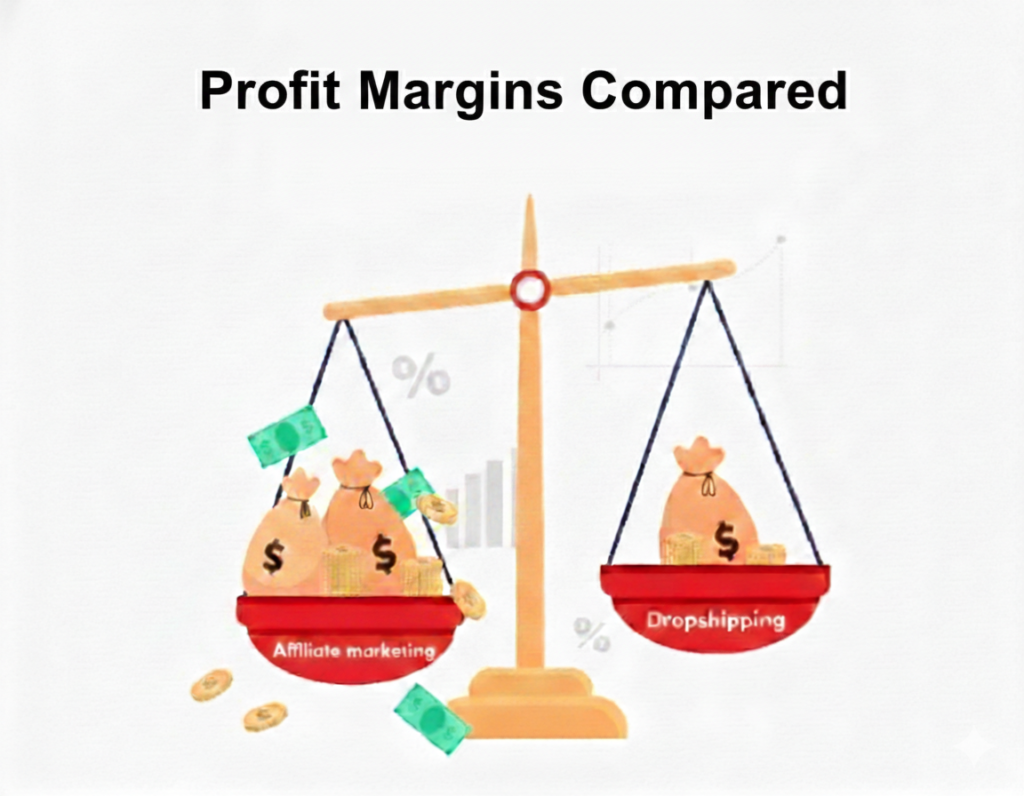
Profit margin is one of the biggest factors in deciding which business model is more profitable. While both affiliate marketing and dropshipping can generate online income, the amount of profit you actually keep is very different.
Affiliate Marketing Profit Margins
Affiliate marketing keeps costs low, making profit margins higher since you don’t deal with products, shipping, or support issues.
Many affiliate programs pay generous commissions—often 5% to 50% or more—on digital products and online services, with recurring earnings available on subscription-based offers.
When your content attracts steady traffic, income grows without higher costs, boosting long-term affiliate profits.
Why Affiliate Margins Stay High
- No product or delivery costs
- Low monthly expenses
- Ongoing recurring commissions
- Free traffic from SEO
Dropshipping Profit Margins
Dropshipping profit margins are often lower and less predictable. Even if sales look high, ongoing costs like ads, fees, and refunds can quickly reduce real profits.
Dropshipping margins usually sit between 10% and 30%, but ad costs, fees, refunds, and supplier issues can quickly reduce profits.
Strong branding and repeat customers can help, but dropshipping heavily relies on ads, so profits can drop if ad costs rise or performance falls.
Challenges with dropshipping margins:
- Ongoing ad spend
- Refunds and customer disputes
- Supplier price fluctuations
- Operational and platform fees
Affiliate marketing offers higher, stable profits, while dropshipping margins are tighter and need constant effort.
6. Earning Potential & Scalability
Affiliate marketing and dropshipping can both make money, but their earning potential and scalability tell very different stories—shaping how fast you grow today and how sustainable your income is tomorrow.

Image Credit: www.oberlo.com
Affiliate marketing provides strong earning potential because it is not limited by inventory or logistics. As content performs better, profits grow while costs remain low.
While dropshipping can scale at speed using ads, higher conversions and more products also bring higher costs. Profit growth often lags behind revenue growth.
Now you can see how each model truly scales.
| Aspect | Affiliate Marketing | Dropshipping |
| Initial Earnings | Slow but steady | Fast start with ads |
| Long-Term Income | Passive and compounding | Requires active management |
| Scaling Cost | Low (organic traffic) | High (paid ads) |
| Operational Load | Low | Medium to high |
| Recurring Income | Common | Rare |
Affiliate marketing delivers consistent long-term growth, minimal risk, and better profit retention, while dropshipping focuses on fast expansion with higher costs and constant optimization.
7. Traffic & Marketing Strategies
Both business models calculate traffic, but how traffic is generated and retained affects the amount of profit.
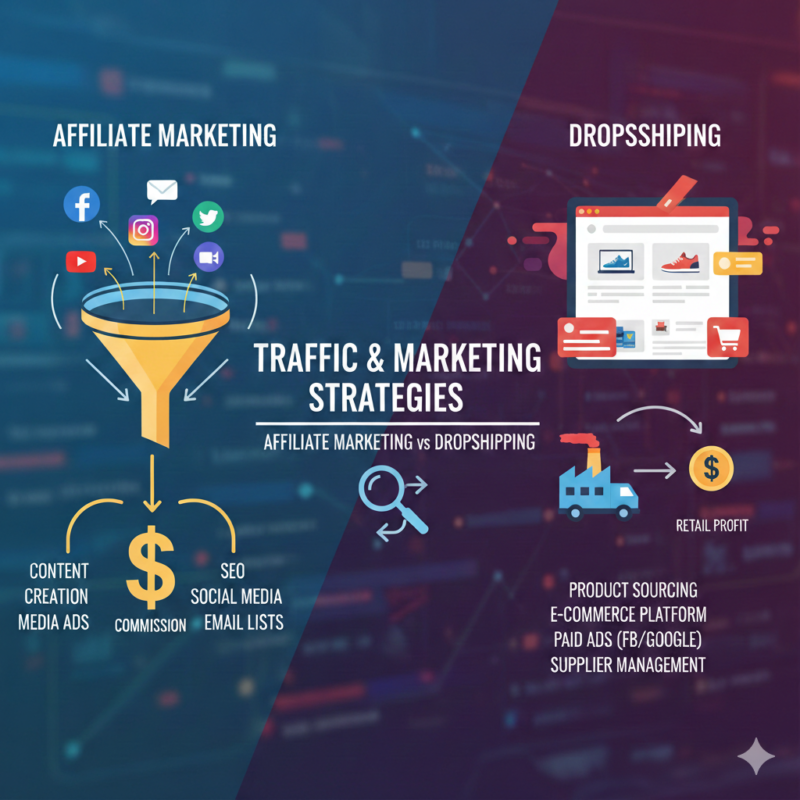
Affiliate marketing is basically building organic traffic through SEO, blogging, YouTube, email lists, and social content. It can be slow at first, but the results get stronger over time.
Once an audience is built, there are no additional costs for new visitors, resulting in consistent and reliable profits over the long term.
Dropshipping dedicates quick results because it runs on paid traffic. But once the advertising stops, both the revenue and the traffic stop.
Rising ad costs, testing, and constant optimization often reduce overall profit consistency.
8. Workload, Automation & Time Investment
Which one will be more profitable in the long run depends on the type of workload, automation & time investment. Affiliate marketing can be run with less supervision. Regular presence is almost mandatory in dropshipping.
Affiliate Marketing: Low Workload, High Automation
Affiliate marketing is essentially a content-driven model. Your main job here is to write blogs, create videos, or run email campaigns. Once your content ranks or an audience is built, you can start earning regular commissions with very little daily time.
There is no need to manage products, shipping, or payments, so the workload remains light. Gradually, it becomes a “build and scale” income system.
Dropshipping: High Workload, Limited Automation
In dropshipping, scale means more responsibility. As sales increase, customer messages, returns, ad budgets, and supplier issues increase in tandem. As a result, while profits increase, time and stress increase even more rapidly.
Affiliate marketing demands more time at the beginning but much less over time. Dropshipping can generate faster results, but it requires ongoing daily effort to stay profitable.
If you want a business that runs with less stress and scales with automation, affiliate marketing wins. Dropshipping can work, but it often feels like a full-time job rather than a passive income model.
9. Which Is More Profitable for Beginners?
Finally, my true answer: For beginners, affiliate marketing is often the most profitable and low-risk model. With minimal upfront investment and no need to manage products or orders, you can focus on creating content and growing traffic to generate steady, passive earnings.
Dropshipping can be profitable, but it usually demands more capital, faster decision-making, and constant hands-on management. Paid ads, refunds, supplier issues, and rising costs can quickly eat into profits—especially for beginners still learning the process.
Choose affiliate marketing if you want low risk, long-term income, and steady growth.
Choose dropshipping if you can invest upfront, handle daily operations, and manage higher risk for faster results.