How to Use Semrush for Keyword Research (Complete Guide)


If you want to grow your website traffic, learning how to use Semrush for keyword research is essential. It helps you find high-value keywords, analyze competitors, and understand search intent to improve your chances of ranking on Google.
Semrush keyword research reveals what your audience is searching for, analyzes competition, and identifies profitable keywords even in highly competitive markets.
This guide helps you move beyond keyword lists and learn how to identify real opportunities, evaluate competition, and create content that improves your Google rankings.
Whether you are starting a blog or growing traffic on Google, using proper keyword research with Semrush is not just a skill—it is the foundation of long-term SEO success.
1. What Is SEMrush Keyword Researchy

SEMrush keyword research is the practice of using the Semrush platform to find the best keywords for SEO and PPC growth.It gives you a clear understanding of search demand and competition before creating content.
With SEMrush, you can deeply analyze each keyword to understand its true potential:
- Search volume – how many people search for a keyword each month
- Keyword difficulty (KD%) – helps you understand how much competition a keyword has in search results.
- Search intent – what users actually want (information, comparison, or purchase)
- CPC value – the average cost advertisers pay per click in Google Ads
- Competitive density – how strong the competition is in paid search
Instead of wasting time on low-value keywords, SEMrush helps you prioritize opportunities with the greatest potential. This enables you to attract qualified visitors, improve rankings, and grow your website more effectively.
2. How to Get Started with SEMrush
Before exploring keywords, take time to set up Semrush and learn how it works. This step helps you avoid mistakes and improves the quality of your SEO decisions.
Step 1: Create an Account
Click here to visit the official Semrush platform and create your free account or start a free trial. You can also access a limited free version with around 10 searches per day for basic keyword research.
Step 2: Open Keyword Research Tools
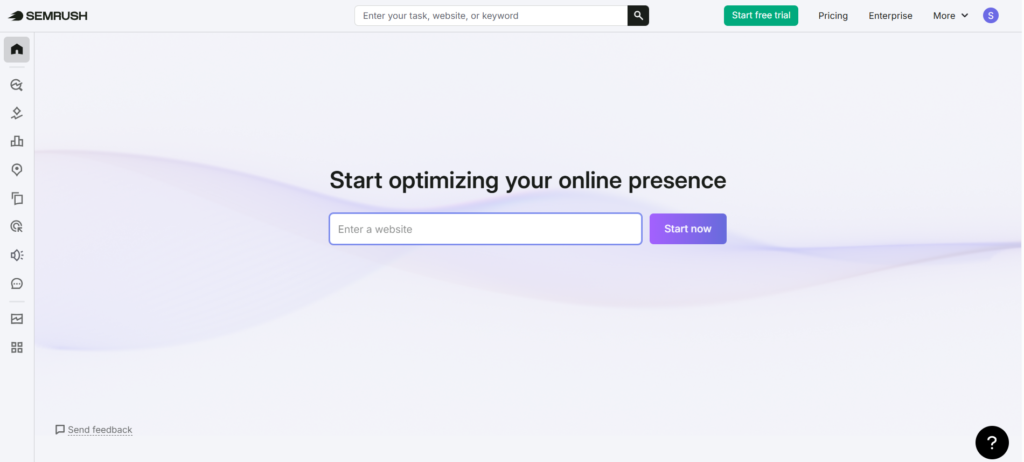
After logging in, you will access the complete SEO dashboard where you can explore keyword ideas, analyze competitors, and run site audits in one place.
Key tools include Keyword Overview for quick keyword insights, Keyword Magic Tool for generating keyword ideas, and Organic Research for analyzing competitor keywords. Together, these tools help you discover opportunities and understand competition more clearly.
Step 3: Enter Your Niche Keyword (Seed Keyword)
Now start your keyword research by entering a seed keyword related to your niche inside Semrush. A seed keyword is a simple, broad topic that defines your website or business and helps you discover profitable keyword ideas.
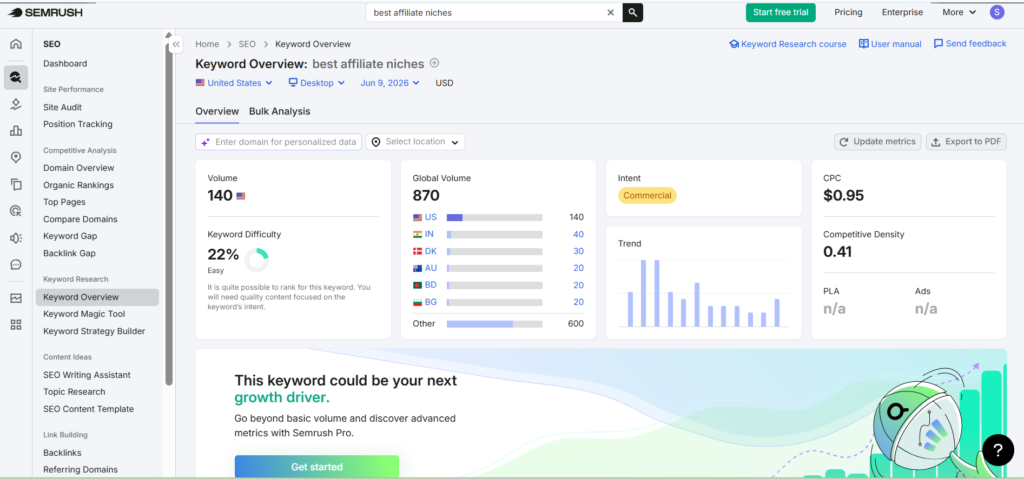
For example, you can start with seed keywords like:
Once you input a seed keyword, SEMrush immediately provides a wide range of related keywords, variations, and long-tail opportunities. This helps you discover what users are actively searching for online.
To get the most out of this process, Semrush offers a 7-day free trial that unlocks full premium access for new users. It allows you to test powerful SEO tools like keyword research, competitor tracking, backlink analysis, and site auditing.
3. Finding Keyword Ideas with Keyword Magic Tool
The Keyword Magic Tool helps you with keyword research by revealing thousands of related search terms from a single topic. This lets you find new content ideas and build a solid SEO plan.
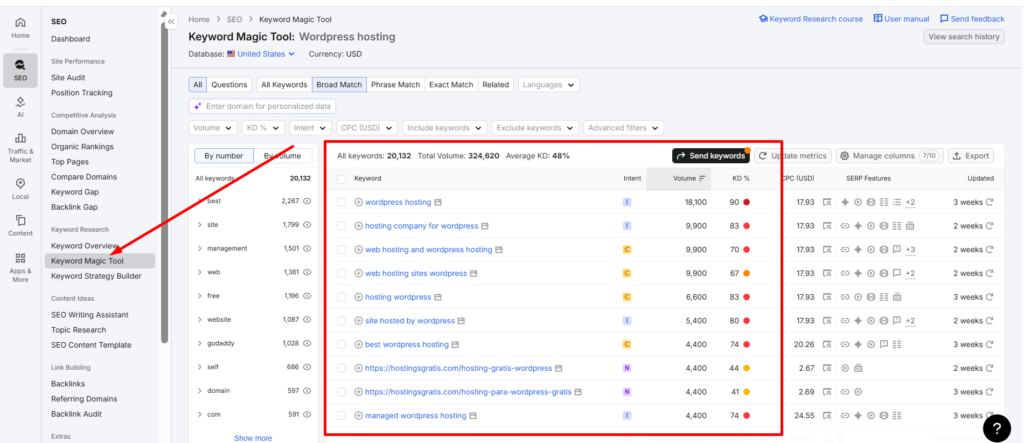
Just type in a keyword related to your niche, and SEMrush will quickly show you a large list of keyword suggestions. You can filter these by search intent, volume, difficulty, and competition to focus on the best options.
Example: If you search for “WordPress hosting,” SEMrush might generate keyword ideas like:
- best WordPress hosting
- cheap WordPress hosting
- WordPress hosting for beginners
These ideas help you understand actual search behavior and identify strong content opportunities. Instead of concentrating on one keyword, you can create topic clusters that reinforce your website’s SEO.
4. Understanding Search Volume, Keyword Difficulty, and Search Intent
When you learn how to use Semrush for keyword research, these three metrics become the foundation of smart keyword selection. They show real search demand, competition level, and user intent before you create any content.

Search Volume
Search volume records how many searches a keyword receives on Google each month, helping you gauge its potential to drive traffic. It is an essential guide for identifying the most valuable keywords to target.
High search volume means higher traffic potential but stronger competition, whereas low search volume targets a smaller audience with easier ranking chances. The right balance helps build authority gradually while securing early wins.
Keyword Difficulty (KD)
Keyword Difficulty (KD) shows the level of competition for ranking a keyword in Google. It helps you understand whether a keyword is easy or difficult to target based on existing top-ranking pages.
- 0–30 = Easy → Best for new websites and quick ranking opportunities
- 30–60 = Medium → Balanced competition, requires SEO optimization
- 60+ = Hard → Strong competition, requires high authority sites and backlinks
Search Intent
Search intent explains the goal behind a user’s search. It helps you understand whether users want information, are comparing options, or are ready to make a purchase.
The main search intent types are:
- Informational → users want to learn something like ( what is SEO, how to use chatgpt, what is affiliate marketing, etc.)
- Navigational → users are looking for a specific website or brand like ( semrush login, BlogWithJourney, amazon Products, etc.)
- Commercial → users are comparing products or services like (semrush vs ahrefs, canva vs photoshop”)
- Transactional → users are ready to take action or buy something like (best web hosting services, best ai tools, best affiliate network, etc.)
5. How to Find Low-Competition Keywords

If you’re starting a new blog or affiliate website, Semrush keyword research helps you uncover easy-to-rank keywords that can bring targeted traffic. This gives new websites a better chance to gain visibility and grow steadily on Google.
Go to the Keyword Magic Tool in Semrush, enter your main keyword, and explore the results. Then filter by Keyword Difficulty (KD%) to find low-competition keywords that typically fall between 0–30 KD.
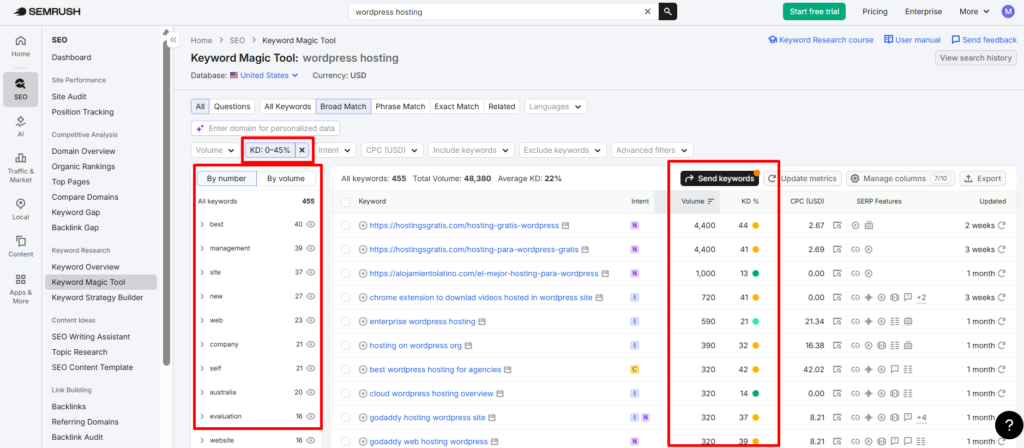
You should also focus on long-tail keywords, as they are more specific and often have less competition. For example: cheap web hosting for small business
Before targeting any keyword, make sure it has enough search volume and clear intent. This improves your ability to rank and build strong organic traffic.
6. Competitor Keyword Research with SEMrush
Competitor keyword research helps you understand what is already working in your niche so you don’t have to start from zero. With Semrush, you can analyze competitor websites and find the exact keywords driving their organic traffic to build a stronger SEO strategy.
Simply open the Organic Research tool, enter a competitor domain, and check their top keywords and pages. Pay attention to first-page rankings for the best opportunities.
You can also find keyword gaps, which show the keywords your competitors rank for but you don’t. These gaps give you strong ideas for new content and help you achieve faster SEO growth.
7. Using the Keyword Gap Tool to Discover Opportunities
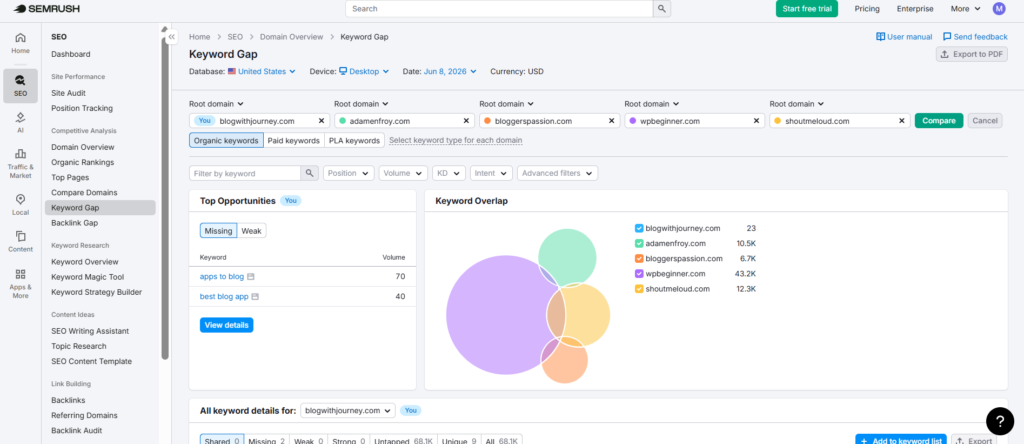
The Keyword Gap Tool in Semrush helps you compare your website with competitors to find profitable missing keyword opportunities. Instead of guessing, you can clearly see which keywords are already bringing traffic to other sites in your niche.
It also highlights content gaps—keywords your competitors rank for but you don’t. By targeting these keywords, you can quickly create content that improves visibility and drives more organic traffic.
Key Sections in Keyword Gap Tool
- Shared keywords – keywords shared between your site and competitors
- Missing keywords – keywords your site is not ranking for
- Weak keywords – keywords where your rankings are weaker
- Untapped keywords – keywords completely missing from your site
By studying these data points, you can discover what actually works in your niche and create content that targets real traffic opportunities instead of guesswork.
8. Organizing Keywords into Topic Clusters
Topic clusters are a smart SEO approach where related keywords are grouped into structured content, helping search engines clearly understand your website’s topic and authority.
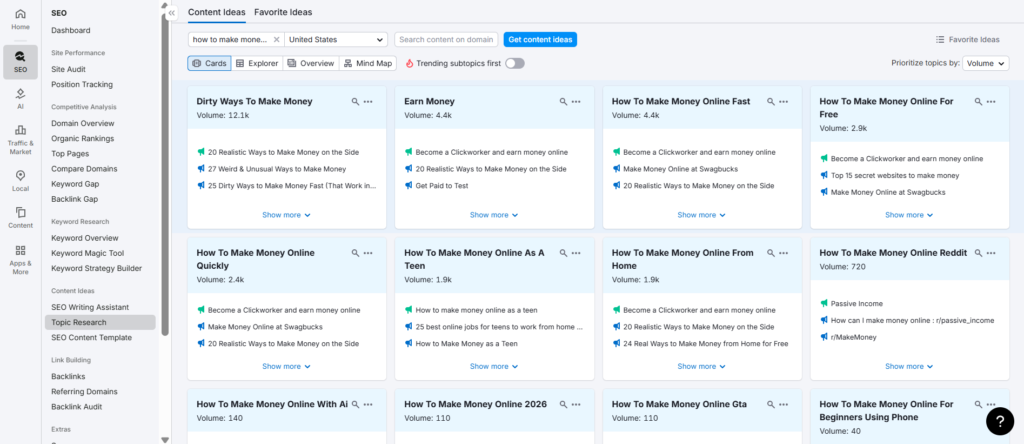
At the heart of this strategy is a pillar page that fully explains the main topic. Supporting content is then created around related keywords, with each article linking back to the pillar page to strengthen SEO and improve rankings.
Why Topic Clusters Matter
- Helps Google understand your site topic clearly
- Strengthens internal linking and structure
- Builds topical authority in your niche
- Improves chances of ranking multiple pages
- Supports long-term organic traffic growth
Using topic clusters with Semrush helps turn keyword research into a complete SEO strategy that improves authority, rankings, and consistent traffic.
9. Analyzing SERPs and Ranking Potential
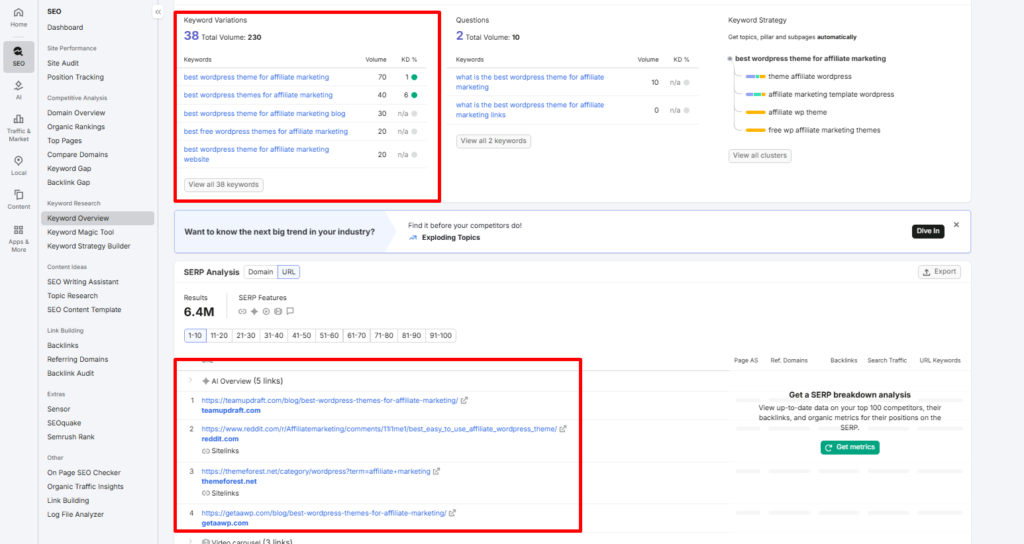
The real value of a keyword becomes clear when you examine its SERP(Search Engine Result Page). This step helps you assess competition, understand ranking difficulty, and uncover realistic opportunities, making it a key part of effective Semrush keyword research.

With Semrush, you gain valuable insights into the websites dominating the search results for a keyword. By analyzing their authority, content strategy, search intent, and SERP features, you can better understand what it takes to earn a competitive position in Google.
Every keyword is not equally competitive. When high-authority sites dominate the SERP, ranking is difficult. However, if smaller or specialized websites appear, it usually indicates an easier opportunity to rank.
10. Advanced SEMrush Keyword Research Tips
Once you understand the basics, advanced Semrush keyword research helps you improve your strategy. It helps you find better keywords, understand user intent, and target high-value traffic opportunities.
If you want to fully explore these advanced strategies, you can use the Semrush 7-day free trial, which gives you complete access to premium features like keyword research, competitor analysis, backlink data, and site audit tools. This allows you to gain hands-on experience and build a stronger, data-driven SEO strategy.
Advanced Tips
- Focus on long-tail keywords with commercial or transactional intent
- Use Keyword Difficulty filters to find easier ranking opportunities
- Analyze competitor keywords and content gaps
- Group related keywords into topic clusters
- Check SERPs before targeting any keyword
- Prioritize keywords that balance traffic potential and ranking difficulty
By applying these advanced techniques in Semrush, you can uncover profitable keyword opportunities, create more strategic content, and achieve stronger long-term SEO results.