Elementor vs Gutenberg: Which Page Builder Is Better?

For WordPress users, understanding Elementor vs Gutenberg can make choosing a page builder much easier. Both make website building easier, but their features and editing experiences are quite different.
Elementor is built for flexible, highly customized website design, while Gutenberg provides a straightforward block-based editing experience. The better option depends on your goals, the complexity of your website, and how much design control you need.
Let’s see how Elementor vs Gutenberg compare across key WordPress features. We’ll cover design, ease of use, performance, SEO, templates, mobile editing, compatibility, and value for money.
1. What Is Elementor?
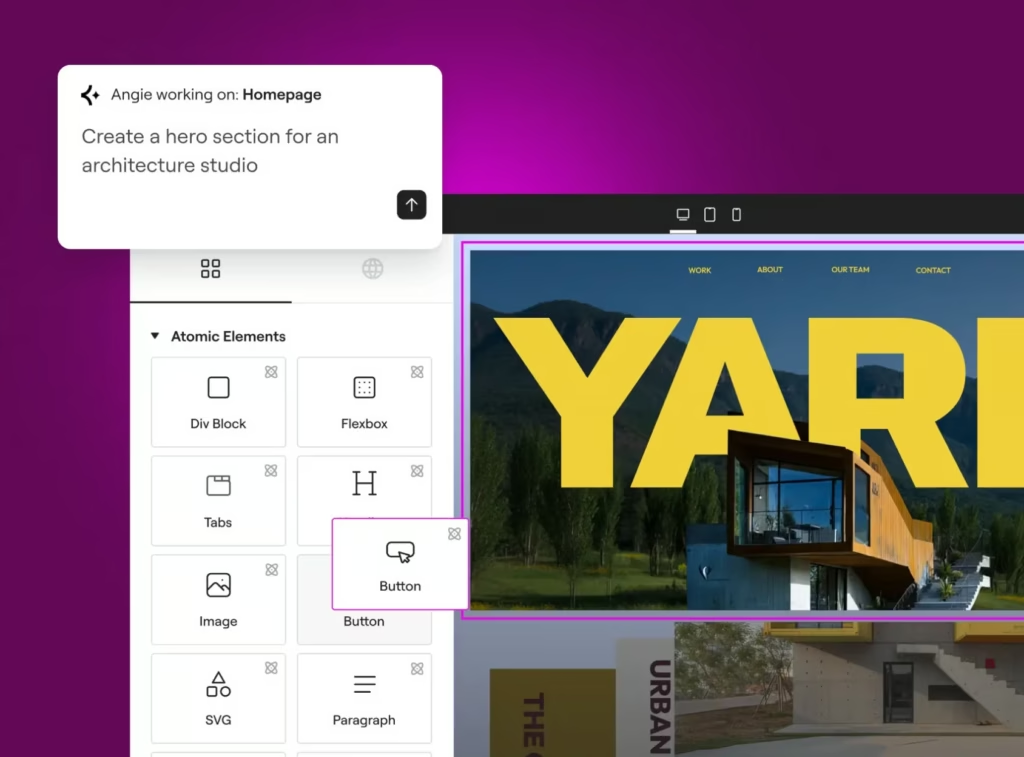
Elementor gives WordPress users an easy way to create professional-looking pages through a visual editor. Create flexible page layouts by simply dragging and dropping the elements you need.
Its powerful design controls give you plenty of flexibility to personalize your website. You can modify fonts, colors, spacing, backgrounds, layouts, and animations directly within the editor.
Key Features of Elementor:
- Simple drag-and-drop editor for easy website building.
- Ready-made widgets, templates, and website designs.
- Customize layouts, colors, fonts, spacing, and responsiveness.
- Create complete websites and WooCommerce store pages.
- Custom CSS for users who want extra control.
2. What Is Gutenberg?
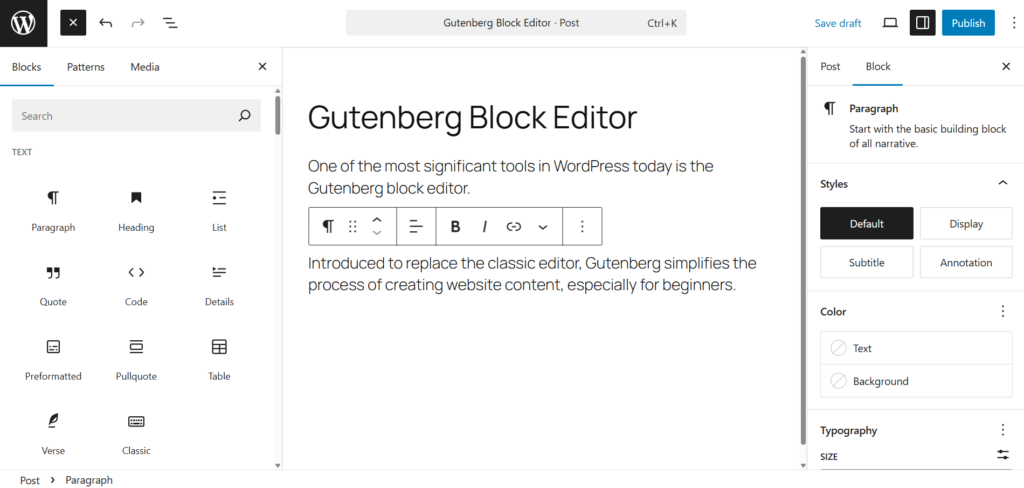
Gutenberg is WordPress’s built-in editor that uses blocks to create and organize website content. Its straightforward design helps users create professional pages without relying on complex website builders.
Add common content elements like text, images, buttons, videos, and columns using blocks. As WordPress’s native editor, Gutenberg requires no separate builder.
Key Features of Gutenberg:
- Built directly into WordPress without extra installation.
- Uses flexible blocks for creating page layouts.
- Lightweight editor designed with performance in mind.
- Supports responsive design and Full Site Editing.
- No additional page-builder subscription needed.
3. Elementor vs Gutenberg: Quick Comparison
|
Feature |
Elementor |
Gutenberg |
|
Ease of Use |
Excellent |
Excellent |
|
Visual Editing |
Excellent |
Good |
|
Performance |
Good |
Excellent |
|
SEO |
Good |
Good |
|
Mobile Editing |
Excellent |
Good |
|
Advanced Design |
Excellent |
Moderate |
|
Pricing |
Free + Paid |
Free |
|
Best For |
Custom designs |
Fast, lightweight websites |
Elementor is better for advanced visual design and customization, while Gutenberg is better for simplicity, performance, and native WordPress editing.
4. Design & Customization Options
For creative freedom, Elementor offers a wide range of powerful design controls. Its visual editor lets you customize nearly every aspect of a page, from typography and colors to layouts and animations.
Gutenberg provides a clean and flexible block-based editing experience for WordPress users. It includes essential customization controls, while additional blocks and modern themes allow you to create more customized layouts.
Note: Use Elementor for advanced layouts and Gutenberg for lightweight, native WordPress editing.
5. Templates, Blocks & Widgets
Elementor offers a large collection of ready-to-use templates and widgets for WordPress websites. Beginners can use these resources to create polished pages without starting from a blank screen.
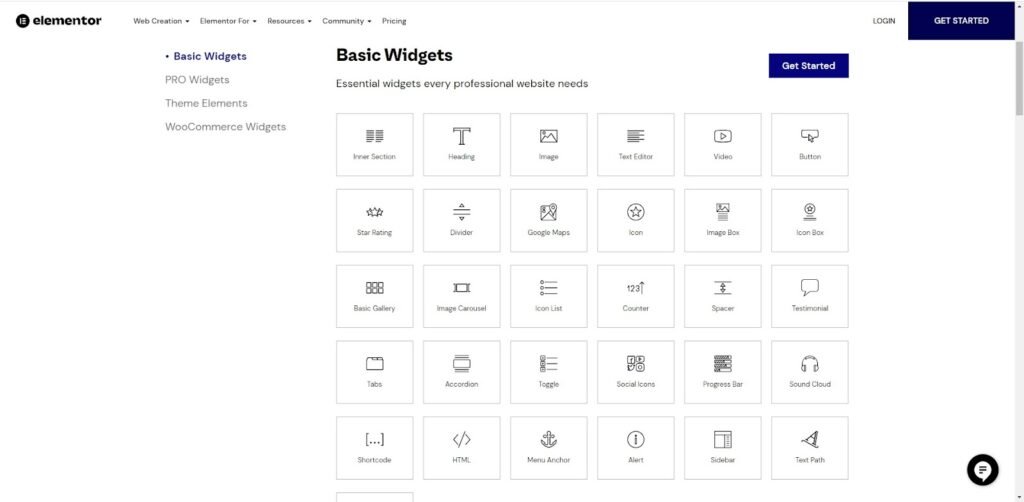
Its widgets support many website requirements, from buttons and images to forms, galleries, videos, and pricing tables. This gives users more options for creative page design.
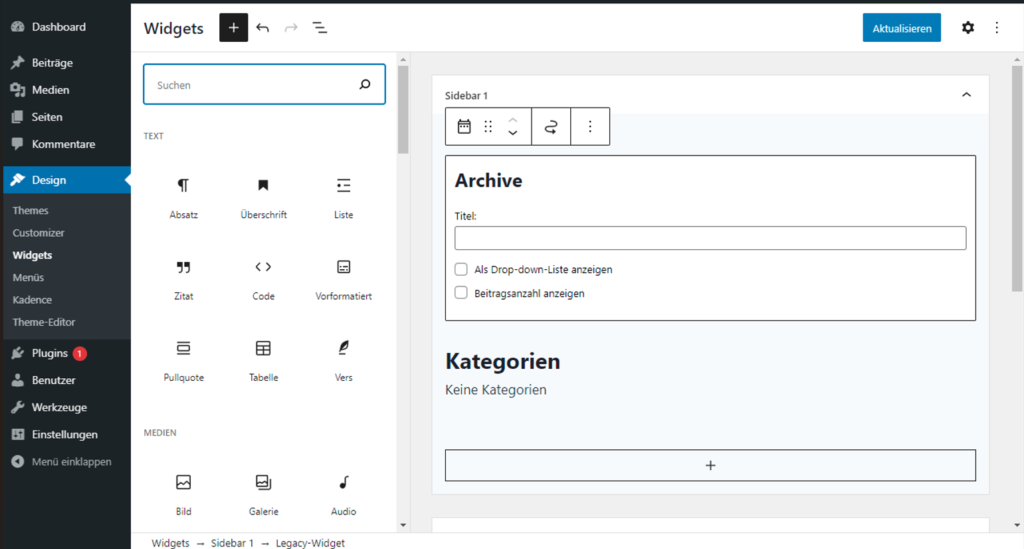
Gutenberg relies mainly on blocks and patterns for creating layouts and content. It keeps the process simple while allowing extra functionality through block plugins.
Note: Elementor for templates and widgets; Gutenberg for native functionality.
6. Website Speed & Performance
Gutenberg is designed to work closely with WordPress, making it a lightweight option for creating pages and posts. This can provide an advantage for websites where performance is a major priority.
Elementor gives users more design freedom, but advanced elements can add extra code and resources. Performance can still be strong when pages are kept clean and properly optimized.
Note: Gutenberg for speed-focused websites, especially when simplicity is the goal.
7. SEO Features & Optimization
Your WordPress SEO success depends on several factors beyond the page builder you choose. Quality content, fast performance, mobile optimization, internal links, and a clear site structure all play important roles.

Elementor offers stronger visual and layout control, whereas Gutenberg provides a clean editing environment with less overhead.
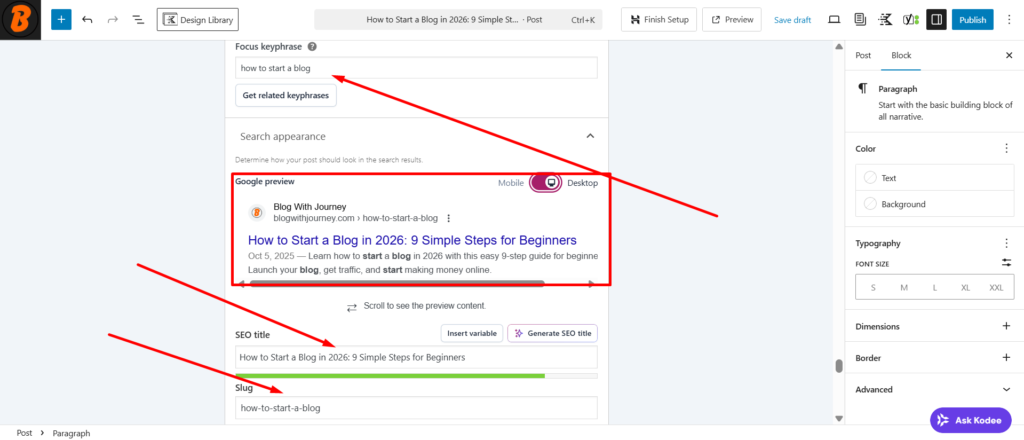
Both support popular SEO plugins, making either option suitable for an optimized WordPress site.
8. Theme & Plugin Compatibility
Gutenberg’s native WordPress integration makes it highly compatible with the wider WordPress ecosystem. It works well with modern themes, plugins, blocks, and site-editing features.
Elementor offers compatibility with many popular themes and plugins, allowing users to create more customized layouts. Some features may depend on the theme or plugin being used.
Note: Gutenberg is the simpler choice for integration; Elementor is stronger for custom layouts.
9. Responsive Design & Mobile Editing
Mobile users make responsive design an important consideration for any WordPress website. Both Gutenberg and Elementor can create layouts that adapt to different devices.

You can use Elementor’s responsive controls to change font sizes, spacing, column layouts, alignment, and element visibility for desktop, tablet, and mobile devices.
Gutenberg offers a simpler approach that works well with responsive WordPress themes. For detailed mobile design adjustments, Elementor provides greater flexibili
10. Pricing & Value for Money
When comparing prices, Gutenberg has a clear advantage because it is part of WordPress. You can use its core blocks and editing features without purchasing a separate page-builder plan.
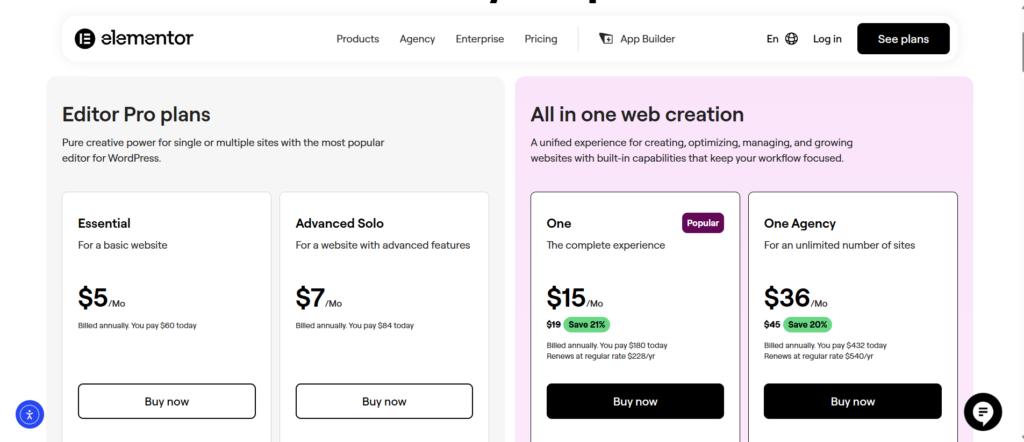
Elementor provides a free version for basic design needs, while its premium plans offer more templates, widgets, and advanced customization options.
Gutenberg
- Cost: Free with WordPress
- Best for: Bloggers, beginners, and lightweight websites
- Main advantage: No separate page-builder subscription
Elementor
- Free Version: Available with core features
- Paid Plans: Add advanced design and website-building features
- Best for: Designers, businesses, agencies, and users who need advanced customization
11. Elementor vs Gutenberg: Pros and Cons
✅Elementor Pros:
- User-friendly visual editing interface
- Powerful tools for custom page design
- Hundreds of useful widgets and templates
- Advanced responsive design controls
- Excellent for landing pages and custom layouts
❌Elementor Cons:
- May add additional resources to complex pages.
- Advanced tools require a paid plan and can be harder for beginners.
✅Gutenberg Pros:
- Native WordPress Block Editor
- Completely free to use
- Lightweight and efficient for content creation
- Easy-to-use block system
- Broad support for WordPress themes and plugins
❌Gutenberg Cons:
- Creating complex pages may require additional extensions.
- Limited built-in tools for advanced visual customization.
12. Which Page Builder Is Better for WordPress?
Both are strong options, but your website’s needs will determine the better choice.
Choose Elementor If You Want To:
- Have complete creative control over page designs
- Build pages through visual drag-and-drop editing
- Use advanced customization and styling options
- Build custom homepages, landing pages, and sales pages
- Explore a large library of templates and widgets
Choose Gutenberg If You Want To:
- Focus on performance and simplicity.
- Use WordPress’s built-in block system.
- Publish articles without complex design tools.
- Reduce website-building expenses.
- Follow a straightforward publishing workflow.
Gutenberg for simple blogging and performance, or Elementor for advanced layouts and creative control.
13. Final Takeaway
Elementor and Gutenberg are both powerful WordPress solutions, but their purposes differ. Elementor suits users seeking advanced visual controls, creative layouts, ready-made templates, and extensive customization.
If you plan to start a blog and mainly publish articles, Gutenberg offers a clean, lightweight, native experience. However, those creating custom homepages, landing pages, sales pages, or service sections may prefer Elementor for greater design freedom.
For simple blogging, Gutenberg is a strong choice, while Elementor is better for custom pages and creative designs.